



What Is a Reflective Essay—and How Do You Write One About Yourself?
A beginner's guide to the reflective essay: choosing an experience, shaping story and thinking into a structure, finding an honest tone, and finishing a draft.
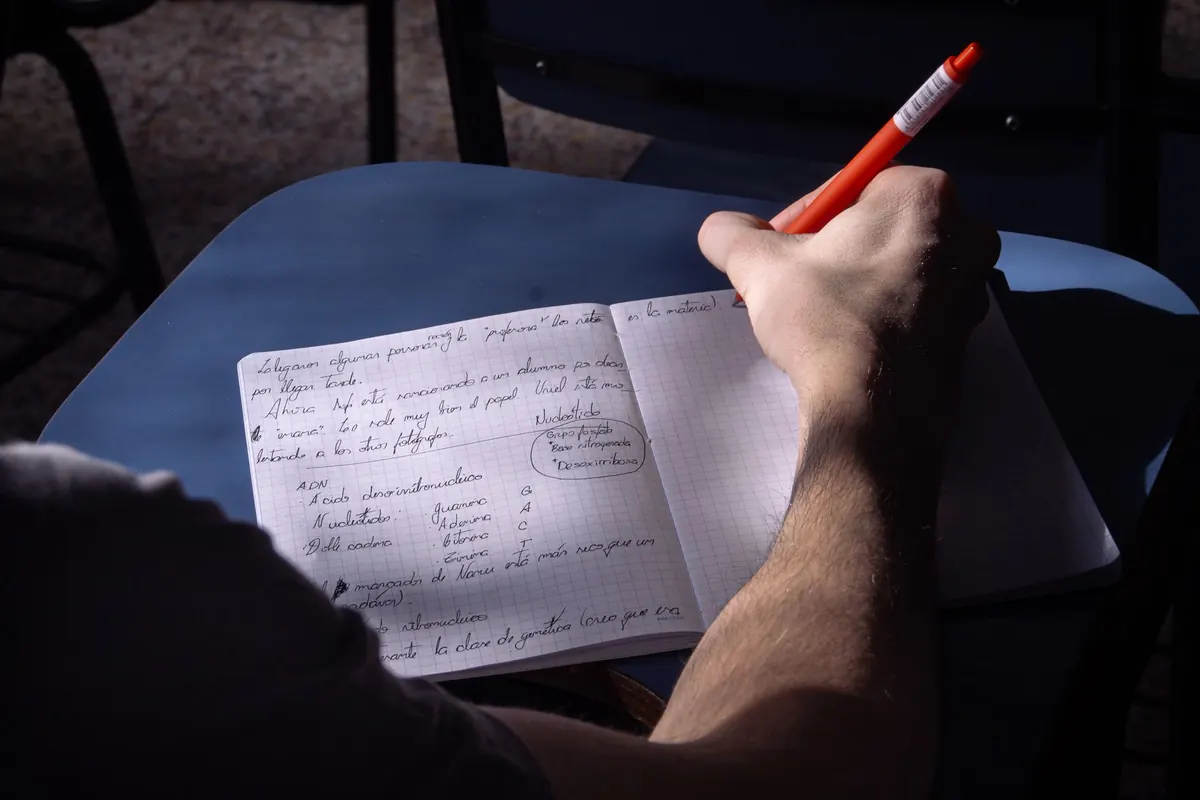
Writing about yourself sounds like the easy option until you sit down and the page stays blank. The difficulty has a cause: a reflective essay asks you to do two things at once — tell what happened, and think about what it meant — and most of us have been trained to do only the first. The result is a piece that reads like a report on your own life, or a confession with no point, or a tidy moral stapled to the end of a story.
None of that is necessary. The form has a shape, a tone, and a set of habits that can be learned in a single sitting. Here is how it works, and how to write one about yourself without flinching and without oversharing.
What a Reflective Essay Actually Is
A reflective essay is a piece of writing in which one personal experience becomes the material for thought. The event matters, but it isn't the point. The point is what you can now see about it that you couldn't see while it was happening.
It sits close to three other forms, and knowing the borders helps:
- A personal statement argues. It is aimed at an admissions tutor or a hiring manager and exists to show that you are suitable. A reflective essay has nothing to prove.
- A diary entry records. It assumes an audience of one and doesn't need to explain itself. A reflective essay has to be legible to a stranger.
- A descriptive essay observes. It can stop at the look of a room. Reflection has to keep moving inward: what did you bring to that room, and what did it do to you?
The word to hold onto is examine. If a paragraph only reports, it hasn't started yet.
The Shape of the Essay
Most good reflective essays, whatever length, move through four steps.
- Open inside a moment. Skip the throat-clearing. Not "I have always been someone who struggles with change," but "The key was still in my hand when the door clicked shut."
- Give the reader enough ground to stand on. Two or three concrete details — an object, a time of day, what someone said — so a stranger can be where you were.
- Step back and interpret. This is the essay proper. What did you assume at the time? What did you want? Where were you wrong, lucky, or unkind? What did you notice only months later?
- Return without tying a bow. Come back to the opening image, or gesture at what has shifted. Resist the last sentence that turns you into a better person.
How much story, how much thinking
A rough working ratio: one paragraph of narration for every two of reflection. If you have three paragraphs of pure plot in a row, something has gone quiet. And watch your tenses — narration in the past ("I said I'd think about it"), reflection in the present ("I was buying myself a day, not an answer"). That shift does a lot of quiet work and readers feel it without noticing.
Keep it to one experience
A 900-word essay can hold one scene and its consequences. Two scenes, if they are genuinely linked. Five events with a paragraph each is not an essay; it's a list with paragraphs attached.
Choosing Something Worth Reflecting On
The essay rarely improves when the event is bigger. A wedding, a move abroad, a spectacular failure — these arrive with so much meaning attached that the thinking gets crowded out. Small moments with friction work better: a conversation you ended badly, a job where you spent three months saying nothing in meetings, the week you were certain you were right and weren't, the class you nearly dropped and still think about.
Two tests before you commit. Can you describe the moment in three concrete details without inventing any? And is there something about it you still haven't settled? If both answers are yes, you have an essay.
If nothing comes to mind, list five moments from the past two years that you have told someone about more than once. Repetition means residue, and residue is where reflection starts.
Tone: Honest Before It Is Wise
The voice you want is level, specific and unshowy. A few things that help:
- Cut adjectives that announce feeling. Instead of "I was incredibly anxious," write "I checked the email four times before opening it."
- Beware the tidy moral. "I learned the value of patience" is where essays go flat. The truer sentence is usually smaller and stranger: "I learned that I would rather be right than liked, and I didn't enjoy finding that out."
- Don't use other people as scenery. If someone appears, keep to what you actually know. You can leave a person out of an essay; it's harder to justify reducing them to a lesson about you.
- Decide your level of exposure and stand behind it. Honest does not mean complete. The reader doesn't need the whole of it — only the part that is true and shaped.
One practical caution: if the experience is still raw, choose something else, or talk it through with someone you trust before turning it into an assignment. Distress is not improved by being formatted.
A Short Example
I spent three weeks working the morning shift at a bakery counter and said perhaps ten words to the woman at the ovens. She was faster than me, and I decided that meant she was impatient. I learned her name from the rota, not from her. On my last day she pushed a paper bag of yesterday's pastries across the counter and told me to come back at Christmas. On the bus home I realised I had spent three weeks deciding what kind of person she was, entirely to give myself a reason to keep my mouth shut.
Notice the mechanics. Short, factual sentences carry the story. The reflection arrives in one sentence at the end, and it praises nobody, including the writer. The detail of the pastries earns the conclusion; without it, the last line would be a slogan. There is no "I learned to be more open" — the reader gets there first, which is what you want.
Where Reflective Essays Usually Go Wrong
- Three paragraphs of story with no interpretation — the reader has no idea why they were told it.
- The lesson announced at the top and then illustrated, so nothing is discovered along the way.
- Abstract language standing in for detail: "it was a transformative period," "I grew as a person."
- Everyone's feelings described, nobody's behaviour.
- The same point made twice in different words, which is the most common form of padding.
- A final paragraph that ties everything neatly and removes any reason to keep thinking.
How to Get One Finished
Drafting is mostly a matter of not doing everything at once. Try this sequence:
- Freewrite for ten minutes. Memory only, no audience, no editing.
- Underline the two or three sentences you didn't expect to write. Those are your seams.
- Sketch three lines: what happened, what shifted, what question is left open.
- Draft in one sitting and let it be bad. Aim short — 900 to 1,100 words covers most assignments.
- Leave it overnight, then read for one thing only: any sentence that tells the reader what to feel or conclude. Replace it with a detail or delete it.
- Read it aloud. Where you stumble, the reader will stumble too.
The essay doesn't need to end with a resolution. It needs to end somewhere honest — with attention rather than a verdict, a sharper look at what you did, what you missed, and what you might notice next time.
Photo: jessica olivella / Pexels